
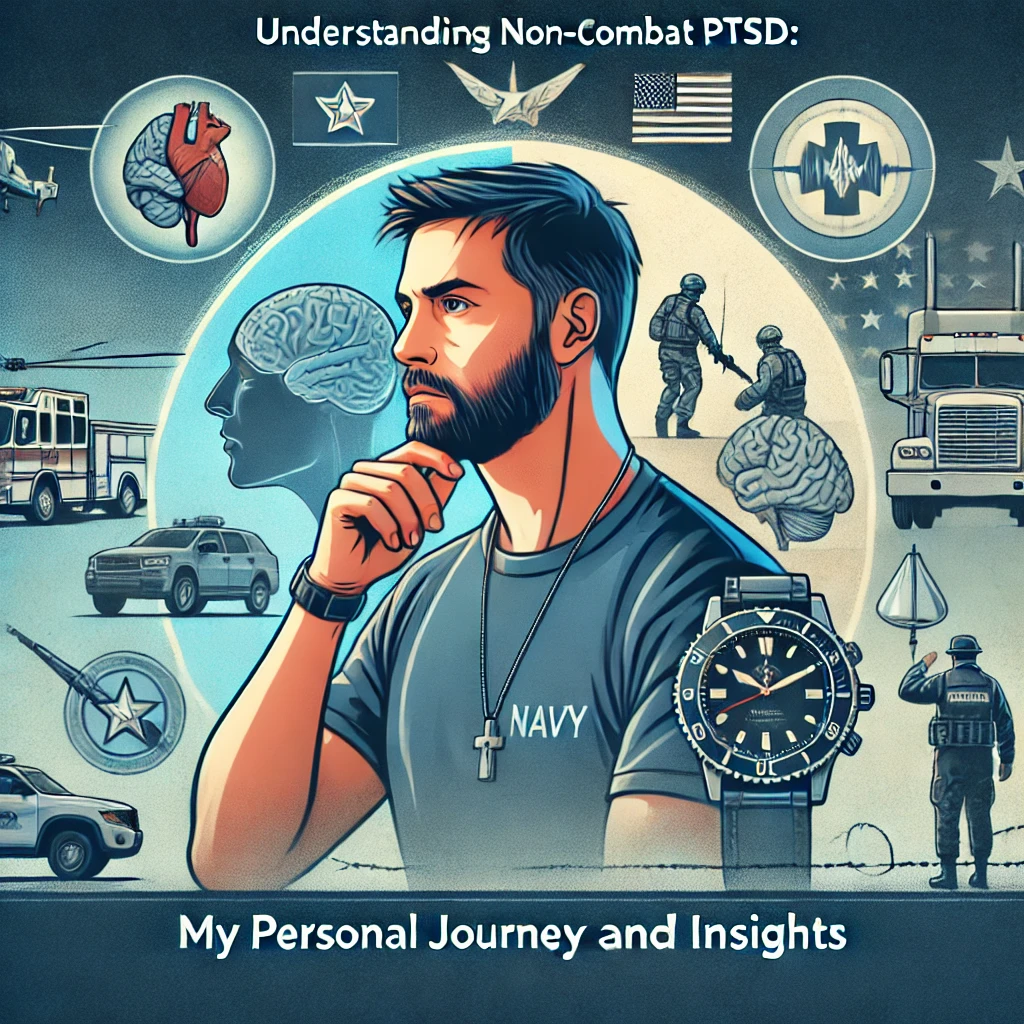
In the conversations I’ve had with someone in the last while who was not a friend or family, when PTSD comes up, I receive two questions:
- Weren’t you in the Navy? I didn’t know the Navy fights.
- How can you have PTSD if you never saw combat?
These assumptions make me nuts. You don’t have to be in combat to get diagnosed with PTSD. Too many people think that non-combat Veterans are not like, say, Marines or Soldiers. That they can’t be service-connected for PTSD or diagnosed with PTSD. If you’re among them, I wanted to make you aware that non-combat Veterans can indeed be service-connected for PTSD. Not only am I living proof myself, but I can also point you in the direction of numerous others who are in my same position.
It’s evident PTSD is mainstream. With symptoms ranging from local news to social media, PTSD is being reported. But to the public, they only recognize PTSD as a product of combat in the war zone. That is a long way from the truth. While many Veterans with PTSD were combat Veterans, not every Veteran was a combat Veteran. And in addition, not every soldier that fights develops PTSD. It may sound threatening, but every case is different. Non-combat civilians may also be able to develop PTSD. Briefly, PTSD can be obtained through witnessing a traumatic event.
The following are some common examples of non-combat PTSD stressors:
Accidents: Non-combat motor vehicle accidents are very common when claiming PTSD. Whether occurring on base or during a time a Veteran was on leave, they might be an Iraq war stressor for PTSD. But a typical accident like a “fender bender” would not make a good stressor for PTSD claim. A tragic accident where people were paralyzed, severely injured so their lives would never be the same again, or witnessed deaths would better illustrate how an accident would cause PTSD.
Physical Assault: Another thing that I have seen a lot of in non-combat-related PTSD claims are Veterans who have been victims of some form of physical, non-sexual assault. Most often, claimants are always male veterans. Normally, it’s the senior guy harassing some junior guy or an assault by the same junior guy.
Loss of a soldier friend: It has long been publicized that suicide is one of the biggest problems our country’s military has been dealing with in recent times. Many Veterans have seen another soldier kill himself. That is clearly traumatic. But this does not even encompass suicide itself. I’ve heard many Veterans of those who were brutally killed while they were in boot camp or training drills.
Decreased sensitivity to the outside world: Also referred to as psychic mental or emotional anesthesia or numbing of feelings, it typically starts right from the point of trauma. The person may describe feeling detached or estranged from others, loss of interest in things that used to be enjoyed, or loss of the ability to feel feelings, especially feelings of tenderness.
Some of the Military Veterans’ PTSD symptoms: In some cases, after deployment, the PTSD symptoms may not be evident for months or even years. While PTSD varies from veteran to veteran, there are four types of symptoms:
- Intrusive, repetitive recollections of the trauma, e.g., flashbacks, nightmares, intrusive thoughts, reliving the whole thing all over again. Exposure to massive emotional and physical reactions to reminders about the trauma (trembling violently, palpitations, panic attacks, etc.).
- Avoidance of stimuli for reminders for the traumatic event, like places, people, ideas, or activities to which you attribute all the frightening recollections. Social withdrawal from relatives and acquaintances and diminution in interest in daily activities away from social withdrawn behavior.
- Negative ideational changes and mood, for instance, fixed ideas about guilt, self-reproach, or fearfulness, pathological amount of excessive negative thinking concerning self or world, and decreased ability to appreciate positive emotions and feelings.
- Perpetually on the alert, emotionally labile, and startle-prone, as characterized by angry outbursts, irritable mood, acting out, disturbed sleep, trouble concentrating, exaggerated startle, and hypervigilance.
Coping mechanisms for Non-combat Military PTSD:
Regular Exercise: Regular exercise is important for military or naval veterans with PTSD. In addition to burning off adrenaline, exercising releases chemicals that enhance the way you feel, both emotionally and physically. Recent research has demonstrated that being aware of your body and the manner in which you feel when exercising assists your nervous system to exit immobilization stress response and become “unstuck.”
Calming Your Nervous System: Just as certain smells, too much noise, or sand in your pocket can instantly return you to the trauma of a non-combat zone, so vision, smells, sounds, and other sensory stimulation will instantly calm you. It’s a matter of discovering what works best for you. Pay attention to your deployment time: what comforted you at night? Was it looking at your family pictures, the smell of chocolate in your home-care package, the hearing of a favorite song, or the smell of a particular perfume or soap.
Social Interaction: Visiting with someone who loves you is a great way of slowing down your nervous system. For any veteran of war or the navy and PTSD, what you want to do is have somebody you can relate to close at hand—somebody you can sit and talk with for hours, someone who will not judge you, criticize you, or be interrupted by people or the phone. That person can be your husband or wife, family member, one of your military comrades, or civilian friend.
Take care of your body: The body symptoms of PTSD are physically stressful, so it is very important to look after exercise, sleep, restful activities, and healthy food. You can find it very hard to relax at first. It is normal behavior for war veterans to be attracted to activities that quicken the discharge of adrenaline after being in a non-combat area.
Deal with flashbacks, nightmares, and thoughts. Flashbacks are most often accompanied with sound and visual triggers of the non-combat trauma you experienced. It feels like it is repeating itself, and thus it is crucial that you accept and believe that your traumatic event will never occur again. One of the good remedies is reminding yourself that even though you feel the experience is occurring, you can look around and be sure you are safe.
References & Resources
National Center for PTSD (VA) – https://www.ptsd.va.gov
VA PTSD Treatment Options – https://www.va.gov/health-care/health-needs-conditions/mental-health/ptsd
VA Disability Benefits for Non-Combat PTSD – https://vadisabilitygroup.com/va-disability-benefits-for-non-combat-ptsd-stressors
How Non-Combat PTSD Stressors Qualify for Benefits – https://www.hillandponton.com/how-non-combat-ptsd-stressors-qualify
Understanding PTSD Symptoms (Mayo Clinic) – https://www.mayoclinic.org/diseases-conditions/post-traumatic-stress-disorder/symptoms-causes/syc-20355967
Prolonged Exposure Therapy for PTSD (Wikipedia) – https://en.wikipedia.org/wiki/Prolonged_exposure_therapy