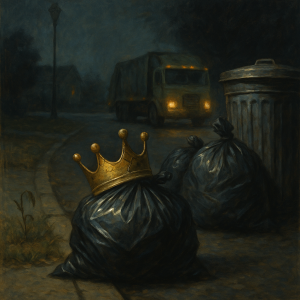
Others find their purpose in the midst of chaos. It was true for me at the Navy. Life there was this strange mix of order and chaos. You were always by the book sometimes. Then you were winging it because the book was no longer there anymore. That is where I was shaped. That is how my mind was conditioned to think, to reason, and eventually, to write.
When in fact I am writing military or psych thrillers, I am employing that background every day. Mostly without even knowing it. It’s just the way I perceive things.
Army life is a never-ending saga. Something or the other happens every day. You’re dealing with another sort of person from another milieu, each responding to the same pressure in one manner or another. You find out what leadership is, how the work groups can crumble and accomplish it at the eleventh hour, and how people crack under pressure. Each uniform has a human dimension, which most people don’t notice.
That’s what I contribute to my novels. My characters are not invincible. They are flawed, probably conflicted, and frequently working in the gray areas of morality. They’re not superheroes. They’re human beings attempting to make choices where no choice is clean.
In The Shattered Shield, I touched on themes of loneliness and camaraderie. I wrote it from memory of time spent away from home with people who became family despite whether you wanted it or not. It’s about attempting to serve the mission with a burden of personal issues weighing you down, something most veterans can attest to.
It taught me to appreciate structure but prepare to compromise. That’s the way I construct stories too. I know where I’m going. I outline goals, plot twists, rhythm. But once I begin writing, this structure is pulled to its limit. Characters develop and change, and the tale takes a different direction.
It’s maddening, but familiar. That’s order and disorder tension and resistance and something that I’ve encountered in military life.
One I’m writing right now is a Cold War defection novel. The Russian test pilot gives up his life to bring America advanced aircraft technology. The novel is historically realist but depends on whim choice. The story works best when characters make decisions—not when I yank them down a trail.
I don’t write for readers. I write for the history nerd who once lived inside me. I write for the veterans still holding on to pieces of their time in service. I write for anyone who’s ever looked around and realized they didn’t belong and had to figure out how to keep going anyway.
Writing makes me work out what I experienced. It keeps me there in my life, even though I’m no longer in uniform.
If I’ve done anything, it’s that life doesn’t want to follow the script. But the best operations—and the best tales—still happen when you don’t give up. Sometimes the mess is the mission.