
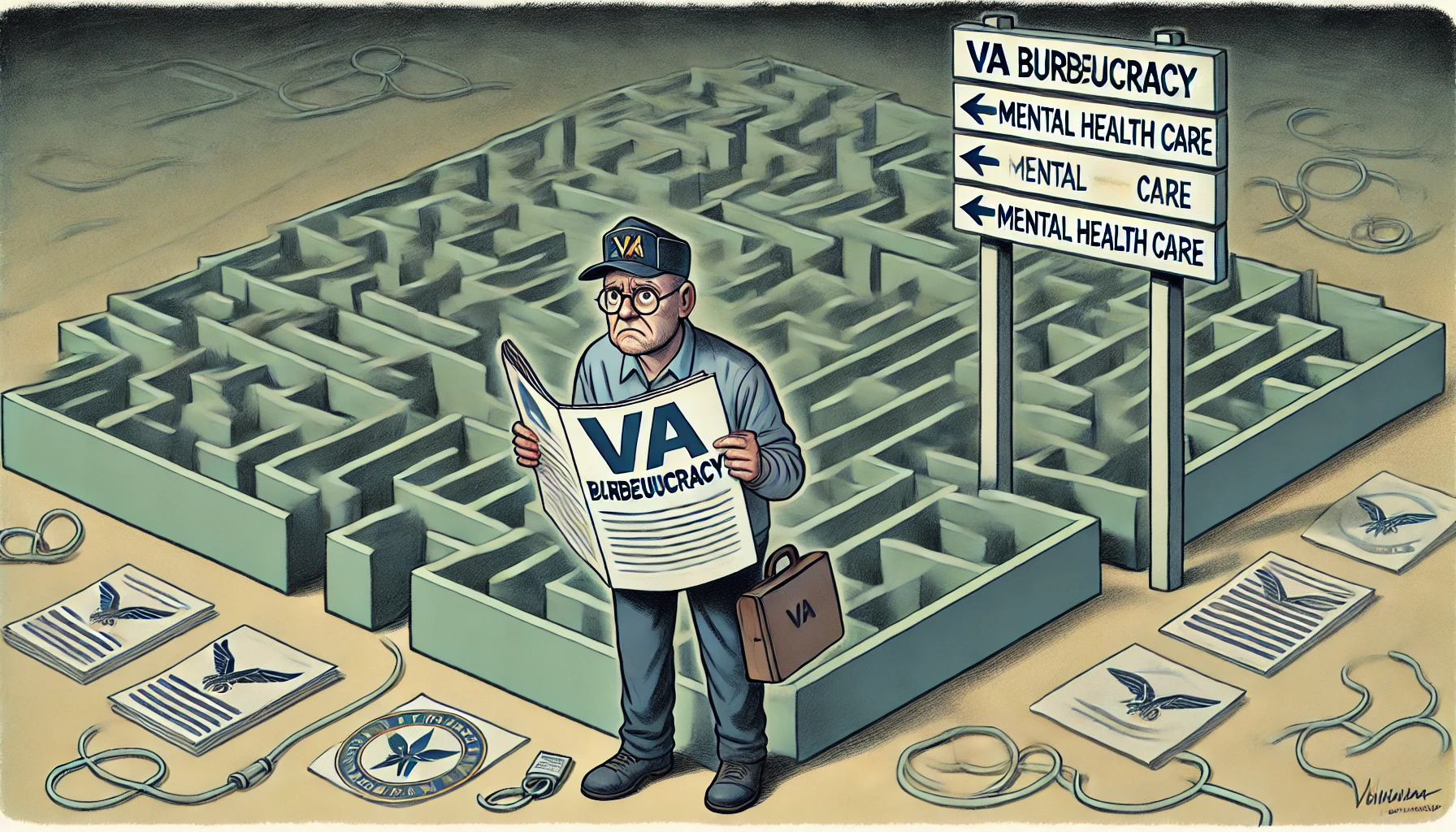
“The VA’s Mental Health ‘Care’: Where Veterans Go to Get Ignored”
Ah, the Veterans Administration, America’s gesture of appreciation for our service. Instead of a welcome with open arms, it’s more like being given directions and saying, “Good luck finding the exit.” For vets who have mental health problems, that describes it. The VA’s assurance of assistance never materializes, and veterans are lost in a labyrinth of delays, red tape, and apathetic care. The outcome? There are individuals more abandoned by the Veterans Administration than they have been abandoned by the very combat zones that they left behind.
The Veterans Administration was supposed to be a beacon of light—taking care of, providing mental health care for, and helping those who had given so much. It is a bureaucratic black hole where requests are lost. Veterans are bogged down in red tape while their mental health worsens. In the era of bombast rhetoric, the VA’s mission is undermined by inefficiency and chronic understaffing.
The reality is that the Veterans Administration cannot recruit and retain proper staff, positions vacant for months on end. The Office of Inspector General published a 2021 report which reported that 285 jobs in Veterans Health Administration facilities were critically short-staffed, a 22% increase from the previous year.
When a veteran needs mental health care, buckle up for a long ride. Wait times can stretch for months, as if the VA’s unofficial motto is, “Hang in there; we’ll get to you… eventually.” The situation only worsens because the Veterans Administration doesn’t have enough mental health professionals to meet demand. A Government Accountability Office report flagged major challenges in recruiting and retaining this staff, which translates directly into delays.
Take the case of John, a war veteran suffering from PTSD. He requested help and was told his initial session would be scheduled six months later—six months of enduring trauma, fear, and depression while waiting for the VA to deem life worthwhile enough to book. It’s not a coincidence. It’s a systematic problem that renders the veterans helpless.
If you can manage to get an appointment, do not hold your breath. You’ll likely be prescribed medication and advised to come on back again. The VA’s fix for complex mental illness issues seems to be pill, pill, pill. Counseling? Too much effort.
Too many veterans are under-therapied and overmedicated. They get a cocktail of medications that zombify them, not a treatment regimen of thorough mental care. The one-size-fits-all solution of the Veterans Administration won’t cut it. Better than to be just another statistic in the system, veterans should be treated.
PTSD isn’t a catchphrase; it’s a debilitating condition that many veterans face every day. You’d think the Veterans Administration would be ready for that. Instead, it often treats PTSD as if veterans can just “get over it” with time (and maybe a few more pills).
When they finally do present themselves at the therapy office, however, the veteran’s trauma is minimized. The individual experience is channeled into a cookie-cutter treatment plan that ignores individual needs. This “magic thinking” approach, whereby the VA somehow hopes that time will heal all ills, accomplishes nothing to advance healing for the veteran.
One of the biggest problems is the disconnect between the people running the show and the veterans they’re supposed to help. It feels like talking to a machine that doesn’t understand why you’re upset. Veterans end up dealing with a faceless bureaucracy instead of an organization that truly cares.
VA system complexity has rendered our veterans nigh on impossible to receive the assistance they warrant. The majority of them are lonelier than ever and are so bogged down in fighting the system as they would be fighting their own demons rather than being helped.
Here’s the punchline: the VA’s shortcomings have dire consequences. 17 suicides among veterans per day, a tragic figure that is a testament to the VA’s failure to keep its veterans’ mental health under control. These women and men came home to an agency that’s doing more harm than good.
The Veterans Administration failures are not just a hassle—they are matters of life and death. The veterans are owed real, serious help. Until the VA gets itself together, these catastrophes will continue to repeat themselves.
And here we sit. The Veterans Administration was intended to be a lifeline, but to many it’s only an obstacle. The psychiatric emergency among vets is real, and the VA’s plodding, bureaucratic, often callous response isn’t abating it. Maybe someday the VA will provide treatment veterans deserve. Until then, they’re on their own trying to navigate the system, hoping someone finally hears.
References:
- U.S. Government Accountability Office report on VA staffing challenges and mental health care: GAO.gov oai_citation:3,Veterans Health Care: Staffing Challenges and Recommendations for Improvement | U.S. GAO.
- VA Office of Inspector General report on severe staffing shortages: Veterans Policy oai_citation:2,Alarming New Report on VA Staffing from the Office of the Inspector General.
- Overview of ongoing VHA staffing challenges: FEDmanager oai_citation:1,VHA Staffing Shortages Worsen After Years of Improvement — FEDmanager.