
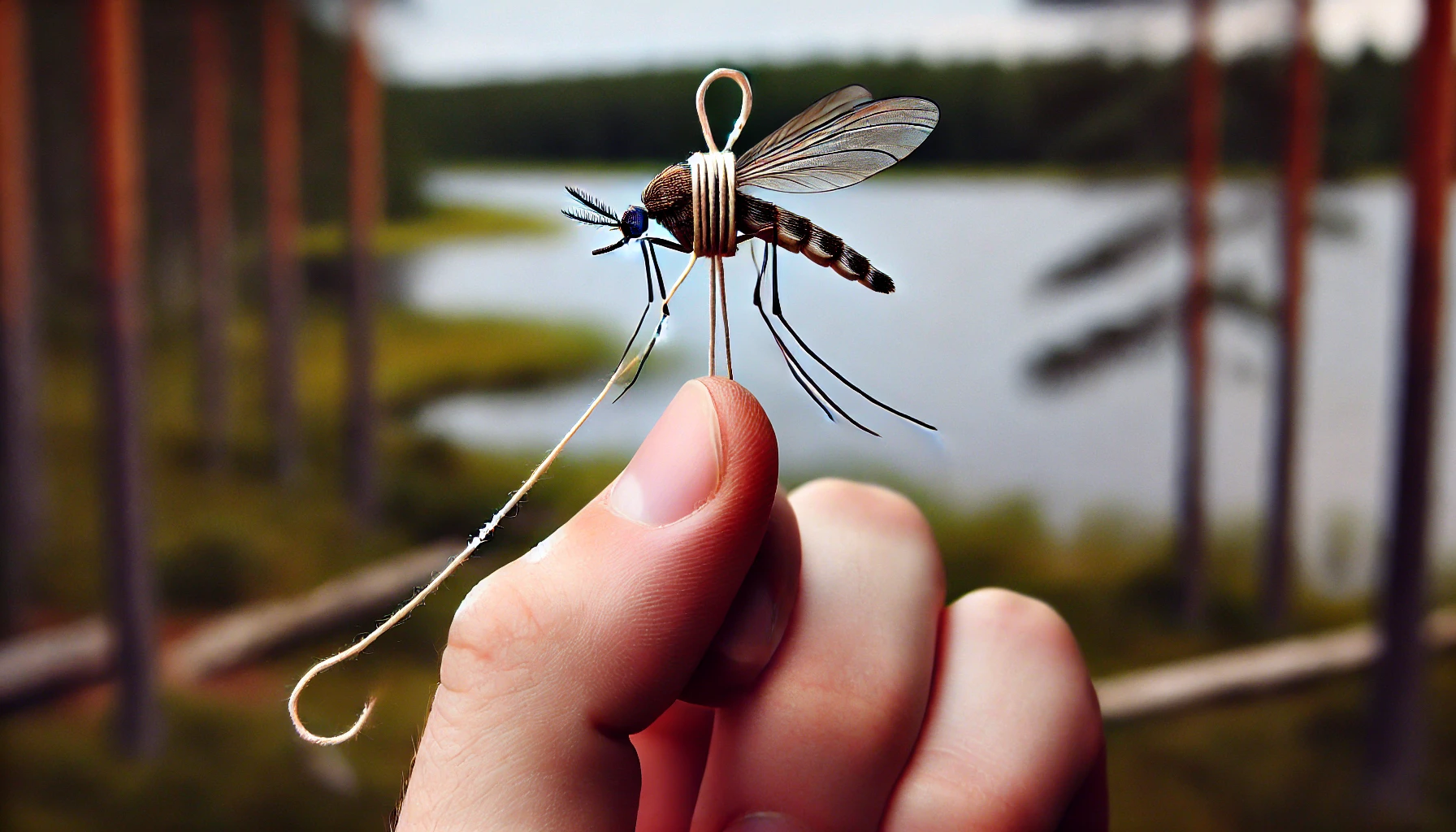
Down in the woods by a glinting lake, where the wind hummed with the thrum of insects and the laughter of boys, Scout Camp was a whirlwind. It was that type of camp where the air was pine needles and anticipation, and the potential for trouble never ceased. The leaders knew that the bubbling unrest that always seemed to erupt whenever a group of boys found themselves with more unstructured time than they ever had in life was the solution: a scavenger hunt. It was designed to be difficult, a list of nearly impossible things that would be about the process and achieved more often than actually completed.
But to a group of teen scouts, the word “impossible” was just a challenge. And on the extensive list of things to find on it—things like “bluebird feather” and “heart-shaped rock”—there was one thing that was unique among them.
“Live mosquito on a string.”
The whole idea was ridiculous. There were mosquitoes all over the forest, but how would someone catch one, let alone string a string around it? The other scouts waved it off as being impossible, focusing instead on the more utilitarian chores. But not me. The more I worked on the impossible mission in my mind, the more determined I was to accomplish it.
Then I had to catch one. I stood in an apporach to the lake where the mosquitoes were dense, flying about like miniature bloodhounds on helicopters. I waved my arms through the cloud, trying to scoop one out of the air, but they were too quick, too oily. It was ridiculous to try to catch a mosquito, but I was not going to quit.
After some failed attempts, I was able to catch one between my fingers not wanting to kill it. But how do I put a string on something so tiny? I recalled something on television—how a soft blow could knock an insect just long enough to immobilize it but not kill it. It was worth a try.
With the utmost care, I pressed the mosquito lightly with the lightest pressure I could manage, hard enough to paralyze it. It succeeded. The mosquito dangled in my hand, still alive but at the moment incapable of flight. The hardest part was now ahead: the string. I had a good thread from my survival kit, but twisting it around the mosquito without crushing it was attempting to thread a needle in darkness.
My fingers trembled as I tied the smallest slip knot I’d ever seen. I couldn’t breathe as I slowly encouraged the loop over the mosquito’s tiny body. It was a delicate move that required steady nerves and a large dose of luck. After having tried dozens of times, I finally managed to tighten the knot. The mosquito flinched, and much to my astonishment, it survived.
I waved my trophy in the air—a laughably tiny, humming bug on a string. The other scouts were amazed when I walked in to camp, mouths open as they saw the prize I had won. The adults, having written out the scavenger hunt assuming no one would ever be able to complete it, were amazed too.
Our team did emerge victorious at the scavenger hunt that day, but not by the number of items that we found, but because we had done the impossible. I had succeeded in designing something that was meant to be an anecdote, something so preposterous it was never meant to be accomplished.
But on that specific day, I discovered something worth mentioning: sometimes the seemingly impossible simply waits for someone clever—or stubborn—enough to prove they can be done. Don’t quit, and you might well succeed in accomplishing the impossible.